

As a young impressionable boy I was so fascinated by the human body, especially those that depicted a superhero physique. I thought this represented a higher physical fitness image. It also made a statement about the mental fortitude that person possessed to reach above the normal standards. Naturally I was drawn to all the comic book Marvel Super Hero characters. I was particularly interested in the Incredible Hulk series on popular 70’s television. That’s how I learned about Lou Ferrigno, who played the enormous green rage monster. He wasn’t drawn but rather molded by his own will and determination overcoming hearing disabilities and competing in bodybuilding contests. This ultimate fascination of mine lead to my profession and unlocking the “Riddle of Steel.” The riddle reference is from the Conan character. The role was portrayed by the one and only Arnold Schwarzenegger. Schwarzenegger happened to be Ferrigno’s biggest challenge whom he never was able to beat for the most coveted bodybuilding titles. In the movies Conan was taught by his father that when they die they must go to Valhalla and stand before their god and answer the riddle of steel. If they did not know the answer they would be cast out rejected and humiliated. Conan’s father, a blacksmith, then asks him the riddle “What is more important fire or ice?” Here in lies the question to making the hardest metals and weapons humanity would see. It is also the answer to building the superhero type physiques that I’ve obsessed over for the last five decades. I share this answer daily with all my clients who seek to burn fat and build muscle when seeking to sculpt their own version of their ideal body.

Thermogenesis, the process by which the body generates heat, plays a pivotal role in human energy metabolism. Derived from the Greek words “thermo” (heat) and “genesis” (creation), it encompasses various mechanisms that contribute to overall calorie (kcal) expenditure. In an era where obesity rates continue to climb—affecting over 650 million adults worldwide according to the World Health Organization—understanding thermogenesis offers valuable insights into weight management, metabolic health, and even disease prevention. This article delves into the science of thermogenesis, its connection to kcal burning, practical daily tips to amplify it, and evidence-based foods and supplements that can enhance this effect. We’ll explore multiple angles, including physiological nuances, individual variations, potential limitations, and broader implications for health and lifestyle.
What Is Thermogenesis and How Does It Relate to Kcal Expenditure?
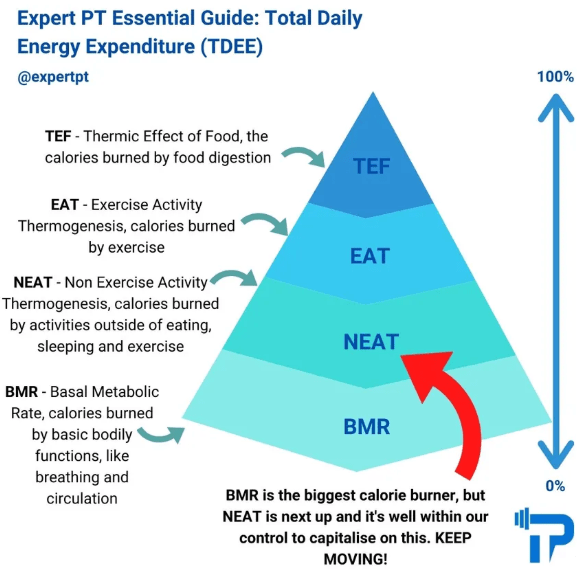
At its core, thermogenesis is the dissipation of energy as heat, which directly influences total energy expenditure (TEE)—the sum of calories burned daily. TEE comprises three main components: basal metabolic rate (BMR, about 60-70% of TEE), the thermic effect of food (TEF, 10%), and physical activity (20-30%). Thermogenesis intersects with all these, but it’s particularly dynamic in adaptive and activity-related forms.
Types of Thermogenesis
Human thermogenesis can be categorized into obligatory and facultative types, each contributing differently to kcal burn:
- Obligatory Thermogenesis: This includes BMR and TEF (also called diet-induced thermogenesis). BMR is the energy required for vital functions like breathing and circulation at rest, accounting for 1,000-1,800 kcal/day in adults. TEF represents the calories burned digesting food—proteins have the highest TEF (20-30% of their calories), followed by carbs (5-10%) and fats (0-3%). For instance, consuming 100 kcal of protein might burn 25-30 kcal during digestion. This baseline thermogenesis is largely fixed but can decline with age or weight loss, leading to “metabolic adaptation” where the body conserves energy to resist further loss.
- Facultative Thermogenesis: This adaptive form responds to environmental cues like cold, diet, or stress. It includes:
- Shivering Thermogenesis: Muscle contractions generate heat during cold exposure, burning up to 400 kcal/hour in extreme conditions, though it’s inefficient long-term.
- Non-Shivering Thermogenesis (NST): Primarily in brown adipose tissue (BAT), where uncoupling protein 1 (UCP1) dissipates energy as heat instead of ATP. Adults have small BAT deposits (e.g., in the neck and upper back), which can burn 100-200 kcal/day when activated. Skeletal muscle also contributes via sarcolipin-mediated calcium cycling in the sarcoplasmic reticulum, potentially accounting for 20-30% of resting energy in some individuals.
- Exercise-Induced Thermogenesis: During physical activity, heat production rises, with post-exercise effects (EPOC) adding 50-200 kcal.
- Non-Exercise Activity Thermogenesis (NEAT): Everyday movements like fidgeting or standing, varying by 200-2,000 kcal/day between individuals. Sedentary people burn ~300 kcal less via NEAT than active ones.
In terms of kcal expenditure, thermogenesis can account for 10-15% of TEE beyond BMR, but in cold environments or with overfeeding, it ramps up to prevent weight gain—a phenomenon called “adaptive thermogenesis.” However, during weight loss, adaptive thermogenesis often slows metabolism by 20-25%, making sustained fat loss challenging. Nuances include genetic factors (e.g., UCP1 polymorphisms affecting BAT efficiency) and age-related declines (BAT activity drops after 40), which can reduce daily kcal burn by 100-200. Implications: Enhancing thermogenesis could add 200-500 kcal/day expenditure, aiding weight control, but over-reliance might stress the body in those with thyroid issues or malnutrition.
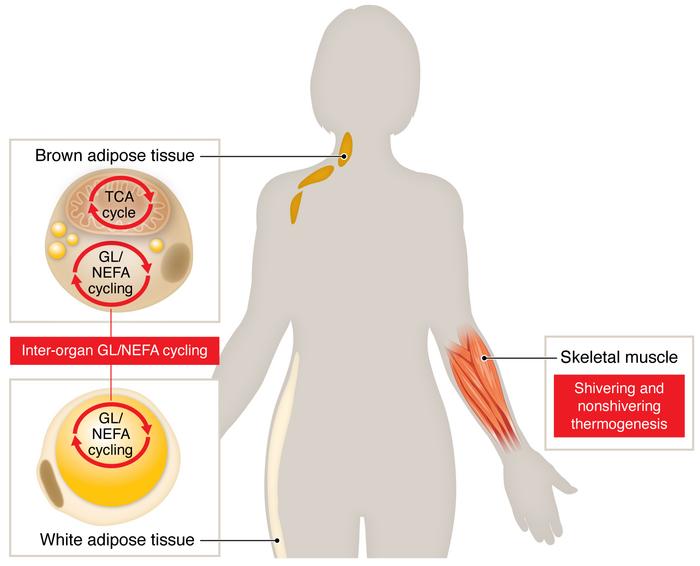
Figure 1: Diagram illustrating key sites of thermogenesis in humans, including brown adipose tissue, white adipose tissue, and skeletal muscle. (Source: JCI)
Daily Tips to Increase Thermogenesis
Boosting thermogenesis doesn’t require extreme measures; small, sustainable habits can cumulatively burn hundreds of extra kcal. Here’s a multifaceted approach, considering edge cases like injuries or climates:
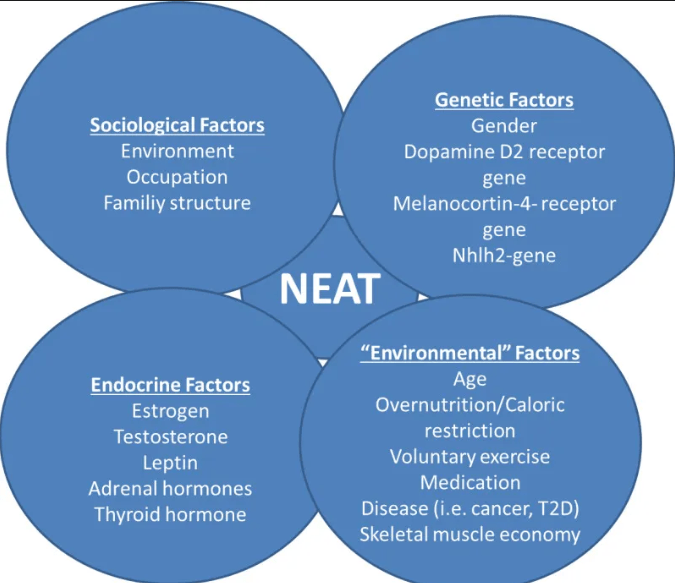
- Incorporate NEAT into Routines: Stand or pace during calls (burns 50-100 kcal/hour more than sitting), use a standing desk (adds 50 kcal/hour), or fidget (up to 350 kcal/day). Tip: Set hourly reminders—research shows this can increase daily expenditure by 300-500 kcal. For desk jobs, walk meetings; edge case: If lower back pain, use anti-fatigue mats. (To learn more about this contact RichLDNRD)
- Cold Exposure: Spend 1-2 hours in 60-65°F (15-18°C) daily—activates BAT, burning 100-250 kcal. Start with cold showers (2-3 min) or ice vests. Studies show mild cold boosts metabolism by 5-10%. Nuance: Avoid if hypothyroid; gradual exposure prevents shock.
- High-Intensity Interval Training (HIIT): 20-30 min sessions (e.g., sprints) elevate EPOC, burning 100-200 extra kcal post-workout. Combine with strength training to build muscle (each lb of muscle burns 6-10 kcal/day at rest). Implication: Ideal for time-poor individuals, but scale for beginners to avoid injury.
- Prioritize Protein and Meal Timing: Eat protein-first meals (increases TEF by 20-30 kcal/meal) and space them—Daily Increased Thermogenesis (DIT) is higher morning vs. evening. Tip: Breakfast with eggs/oats burns more than skipping.
- Hydrate Strategically: Drink 3L water daily, preferably cold (body warms it, burning 20-30 kcal/L). Add green tea for catechins.
- Spice Up Meals: Add capsaicin (chili) to boost thermogenesis by 50-100 kcal/meal.
- Sleep and Stress Management: 7-9 hours sleep optimizes hormones (leptin/ghrelin) for higher BMR; mindfulness & meditation reduces cortisol, preventing adaptive slowdown. Implication: Poor sleep cuts thermogenesis by 5-20%.
Consistency is key—combining tips could add 500-1,000 kcal/week burn, but track with apps to avoid overestimation.
Foods That Enhance Thermogenesis
Certain foods naturally elevate thermogenesis via bioactive compounds, increasing kcal burn by 5-15% post-meal. Focus on whole foods to avoid processed pitfalls:
- Protein-Rich Foods: Chicken, fish, eggs, legumes—high TEF (e.g., 100g chicken burns 25 extra kcal). Example: Salmon’s omega-3s boost fat oxidation. Nuance: Plant proteins like lentils suit vegans but may require more volume.
- Spicy Foods: Chili peppers (capsaicin) raise core temperature, burning 50-100 kcal. Add to stir-fries; edge case: Avoid if GERD-prone.
- Green Tea and Coffee: Catechins/caffeine increase NST by 4-5% (80-100 kcal/day). Drink 2-3 cups; implication: Synergistic with exercise.
- Ginger and Cinnamon: Boost metabolism by 20-50 kcal/meal. Use in teas/oats.
- Whole Grains and Fiber-Rich: Oats, brown rice—higher DIT than refined.
- Berries and MCT Oil: Blueberries’ anthocyanins, coconut oil’s medium-chain triglycerides enhance fat burn.

Figure 2: Infographic of natural fat-burning foods that support thermogenesis. (Source: Pinterest)
Supplements That Enhance Thermogenesis
Supplements can amplify thermogenesis but aren’t magic—combine with diet/exercise. Consult your dietitian (RichLDNRD), especially with conditions like hypertension.
- Caffeine: 100-200mg (e.g., via pills) boosts metabolism by 3-11% (50-100 kcal). Nuance: Tolerance builds; cycle use.
- Green Tea Extract (EGCG): 250-500mg daily increases fat oxidation by 17%. Implication: Liver-safe at moderate doses.
- Capsaicin/Cayenne: 2-5mg raises thermogenesis by 50 kcal. Edge case: GI upset possible.
- L-Carnitine: 500-2,000mg aids fat transport for burn. Best for athletes.
- CLA: 3-6g may reduce fat by 0.5-1 kg over months, but evidence mixed.
- Ask your dietitian RichLDNRD about ECA Stacks
Warnings: Supplements like Garcinia cambogia show minimal efficacy with risks; avoid unproven ones.
Adaptive Thermogenesis in Weight Loss: Mechanisms, Causes, Effects, and Mitigation Strategies
Adaptive thermogenesis (AT) is a fascinating yet frustrating physiological phenomenon that often undermines efforts to achieve and maintain weight loss. In essence, it represents the body’s evolutionary defense mechanism against energy deficits, where metabolic rate decreases more than expected based on changes in body composition. This adaptive response can make sustained weight loss feel like an uphill battle, contributing to the high rates of weight regain observed in many individuals—up to 80% within five years, according to long-term studies. We will now explore AT from multiple perspectives: its definition and underlying mechanisms, causes and triggers, effects on weight loss trajectories, evidence from clinical and experimental research, strategies for mitigation, nuances and individual variations, edge cases, and broader implications for health and obesity management. By dissecting these elements, we aim to provide a nuanced understanding that empowers my clients & readers to navigate weight loss more effectively.
What Is Adaptive Thermogenesis?
AT refers to a greater-than-predicted reduction in energy expenditure (EE) during periods of negative energy balance, such as caloric restriction or increased physical activity. It is distinct from the expected drop in resting energy expenditure (REE) due to loss of fat mass (FM) and fat-free mass (FFM), which alone would account for about 15-20 kcal per pound lost. Instead, AT amplifies this decline, potentially reducing daily EE by an additional 100-500 kcal, depending on the individual and duration of the deficit.
AT primarily affects REE (60-70% of total EE), but it can also influence non-resting EE components like the thermic effect of food (TEF) and non-exercise activity thermogenesis (NEAT). For context, in a classic study of contestants from “The Biggest Loser,” participants experienced an average AT of 500 kcal/day six years post-competition, far exceeding predictions from body composition changes. This “metabolic adaptation” creates a caloric “gap” that favors weight regain, as the body strives to restore its previous energy stores—a survival trait honed during famines in human evolution.
Adaptive Thermogenesis – How It Applies to Weight Loss and Weight Gain – Revive Stronger
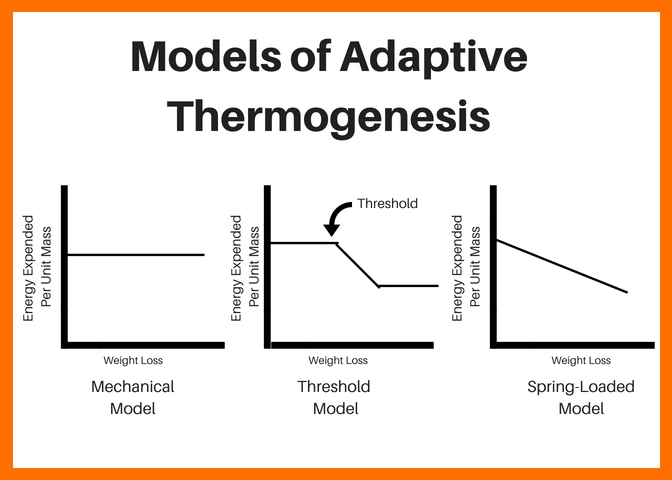
Figure 1: Models of Adaptive Thermogenesis, illustrating mechanical (linear decline), threshold (sudden drop), and spring-loaded (accelerating decline) patterns during weight loss. These models highlight how AT can manifest differently across individuals.
Physiological Mechanisms of Adaptive Thermogenesis
AT arises from a symphony of hormonal, neural, and cellular adaptations designed to conserve energy. Key mechanisms include:
Hormonal Changes
- Leptin Decline: As the “satiety hormone” produced by fat cells, leptin’s drop during weight loss signals “starvation” to the brain, suppressing thyroid function and sympathetic nervous system (SNS) activity. This reduces REE by 10-15%. Example: In obese individuals losing 10% body weight, leptin can fall by 50%, triggering AT.
- Thyroid Hormone Suppression: Reduced triiodothyronine (T3) and thyroxine (T4) slow metabolism. Studies show T3 levels correlate inversely with AT magnitude.
- Other Hormones: Increased ghrelin (hunger hormone) and decreased insulin enhance energy conservation. Cortisol spikes from stress can exacerbate AT by promoting fat storage.
Neural and Autonomic Pathways
- Sympathetic Nervous System Downregulation: Lower SNS tone reduces brown adipose tissue (BAT) activation and non-shivering thermogenesis, cutting EE by up to 200 kcal/day. This is mediated by hypothalamic centers responding to low leptin.
- Hypothalamic Integration: The arcuate nucleus integrates signals from leptin, insulin, and gut hormones, adjusting EE via efferents to the SNS and thyroid axis.
Cellular and Tissue-Level Adaptations
- Mitochondrial Efficiency: Cells become more “thrifty,” producing ATP with less oxygen and fuel, reducing heat loss (thermogenesis).
- Skeletal Muscle Changes: Reduced muscle efficiency and NEAT (e.g., less fidgeting) contribute 20-30% to AT.
- Brown/Beige Fat Inactivation: Less BAT activity limits facultative thermogenesis.
Nuances: AT is not uniform; it can be “asymmetric,” more pronounced in weight loss than gain, reflecting evolutionary bias toward fat preservation. In adolescents with obesity, AT predicts fat mass regain, highlighting developmental variations.
Causes and Triggers of Adaptive Thermogenesis
AT is primarily triggered by sustained energy deficits, but its intensity varies:
- Caloric Restriction: Rapid or severe deficits (>500 kcal/day) elicit stronger AT than gradual ones. A 50% restriction in overweight adults induced AT within a week, predicting 6-week weight loss.
- Weight Loss Magnitude: Greater losses (e.g., 10-20% body weight) amplify AT, with effects persisting years.
- Diet Composition: Very low-carb diets may heighten AT via reduced T3, while high-protein mitigates it.
- Exercise: Aerobic exercise can exacerbate AT if not paired with resistance training, which preserves FFM and blunts the response.
- Individual Factors: Genetics (e.g., UCP1 variants), age (worse in older adults), sex (women may experience more due to estrogen), and baseline metabolism influence susceptibility. Edge case: In physique athletes, AT is temporary, resolving post-competition.
Causes extend beyond diet: Sleep deprivation, stress, and medications (e.g., beta-blockers) can indirectly trigger AT by altering hormones.
Effects of Adaptive Thermogenesis on Weight Loss
AT’s primary effect is creating a “plateau” or slowdown in weight loss, where progress stalls despite adherence. For example, an expected 1 lb/week loss might drop to 0.5 lb due to 200-300 kcal reduced EE. Long-term, it promotes regain: In one study, higher AT correlated with greater fat rebound in adolescents.
Positive effects? In evolutionary terms, AT conserves energy, but in modern contexts, it exacerbates obesity cycles (yo-yo dieting), increasing risks for metabolic syndrome, insulin resistance, and psychological distress (e.g., frustration leading to abandonment). Edge case: In bariatric surgery (e.g., gastric bypass), AT is blunted, contributing to sustained loss—up to 30% body weight long-term—via altered gut hormones.
Measurement challenges: AT is quantified as measured REE minus predicted (from equations like Harris-Benedict adjusted for body comp), but inaccuracies in body comp assessment (e.g., DXA vs. underwater weighing) can skew results.
Mitigation Strategies for Adaptive Thermogenesis
While AT can’t be eliminated, strategies can minimize it by 20-50%, improving outcomes:
Dietary Approaches
- High-Protein Diets: 1.6-2.2 g/kg preserves FFM, boosting REE and reducing AT by 100-200 kcal/day. Example: In athletes, high protein blunted AT during contest prep.
- Carb/Refeed Cycles: Periodic high-carb day (e.g., 1/week) restore leptin/T3, temporarily reversing AT.
- I refer this as IF YOU DO 4+6 u get 1 (4 days/week Pa Pa Workout + 6 days/week sticking to meal plan YOU GET 1 (ONE) up day (splurge day). The nuance here is that ONE MUST ADHERE TO THE 4 & 6 TO EARN THE ONE.
- Reverse Dieting: Gradually increase calories post-loss (50-100 kcal/week) to “reset” metabolism without regain. (maintenance PLAN)
Exercise Interventions
- Resistance Training: Builds/preserves muscle, countering FFM loss and AT. Combine with HIIT for EPOC boost.
- NEAT Focus: Increase daily steps to offset reduced spontaneous activity.
Pharmacological and Emerging Therapies
- Incretin Mimetics (e.g., GLP-1 Agonists like Semaglutide): Reduce AT by stimulating BAT thermogenesis and preserving REE. In trials, they led to 15-20% sustained loss with less metabolic slowdown. (Have an exit strategy that reduces & eventually discontinues any drug regimen)
- Beta-3 Agonists/Thyroid Mimetics: Experimental drugs target BAT activation, potentially adding 200-300 kcal EE. (Have an exit strategy that reduces & eventually discontinues any drug regimen)
- Leptin Supplementation: Effective in rare leptin-deficient cases but not general obesity. (Have an exit strategy that reduces & eventually discontinues any drug regimen)
Lifestyle: Optimize sleep (7-9 hours) and stress management to maintain hormones. Edge case: In Thalassemia or asthma patients, tailor to avoid iron overload or respiratory strain.

Nuances, Edge Cases, and Broader Implications
Nuances: AT’s persistence is debated—some studies show it resolves within months post-diet, others indicate years. It’s more severe in rapid vs. slow loss, and cultural diets (e.g., high-carb Asian vs. high-protein Western) may modulate it.
Edge Cases:
- Surgery Patients: Blunted AT post-bypass aids 25-35% sustained loss.
- Athletes: Temporary AT during cuts, but training volume mitigates.
- Elderly/Menopausal: Exacerbated by sarcopenia/hormone shifts.
- Genetics: “Thrifty genes” in some populations (e.g., Pima Indians) heighten AT.
Implications: AT explains why 95% of diets fail long-term, fueling calls for holistic approaches beyond “eat less, move more.” It impacts public health—obesity costs $2 trillion globally—urging research into BAT-activating drugs. Psychologically, understanding AT reduces self-blame, improving adherence.
How Clothing Influences Thermogenesis
Clothing affects thermogenesis by altering the body’s thermal microenvironment, which triggers adaptive responses to maintain core temperature (around 37°C). Key pathways include:
- Heat Retention and Insulation: Fabrics that trap body heat increase core temperature, prompting non-shivering thermogenesis (NST) in brown adipose tissue (BAT) or sweating for evaporative cooling. This can elevate energy expenditure by 5-10% during activity, as the body works harder to dissipate heat. For instance, neoprene materials create a “sauna effect,” boosting sweat production and potentially short-term calorie burn via increased heart rate and metabolic demand.
- Cold-Induced Activation: Paradoxically, clothing that cools the body (e.g., via phase-change materials or cooling fabrics) can stimulate BAT thermogenesis, where mitochondria “uncouple” to produce heat instead of ATP. Mild cooling (e.g., 2-4°C drop) can burn 100-200 extra kcal/day by activating this “beiging” of white fat. This is the principle behind “cold vests” that trick the body into ramping up metabolism.
- Moisture Management and Wicking: Breathable, moisture-wicking fabrics enhance evaporative cooling, but in humid or layered setups, they can indirectly increase thermogenesis by maintaining a higher sweat rate without discomfort. Conversely, poor wicking (e.g., cotton) can lead to “clammy” sensations that reduce activity levels, lowering overall expenditure.
- Infrared Reflection or Emission: Advanced materials like metallized polyethylene reflect infrared radiation back to the skin (warming) or allow it to escape (cooling), fine-tuning heat balance. This can amplify NST by 10-20% in controlled studies.
Nuances: Thermogenic effects are amplified during exercise (e.g., +50-100 kcal/hour) but minimal at rest. Individual factors like age (BAT decreases after 40), sex (women have more BAT), and acclimation (regular cold exposure builds tolerance) influence outcomes. Edge case: In extreme heat, such clothing could lead to overheating, reducing performance or risking heatstroke.
Types of Thermogenic Clothing
Thermogenic clothing spans casual wear, athletic gear, and high-tech innovations. Categories include:
1. Insulating and Heat-Retaining Garments
These trap heat to elevate core temperature, promoting sweating and metabolic upregulation. Examples:
- Neoprene Suits or Pants: Made from synthetic rubber, they create a thermal barrier, increasing sweat and potentially thermogenesis by 20-30% during workouts. Popular for “sweat sessions,” like sauna suits used by UFC fighters for weight cutting.
- Hoodies and Layered Activewear: Simple cotton or fleece hoodies raise temperature, with studies showing a slight metabolic boost (e.g., 5-10% during cardio). Implication: Affordable but less precise; breathable synthetics (e.g., polyester blends) prevent overheating.
2. Reflective and Adaptive Fabrics
These use materials to manipulate infrared radiation:
- WarmLife Jackets: From LifeLabs, featuring aluminum coatings that reflect body heat, increasing temperature by up to 18°F with 30% less material. Designed for energy efficiency, they enhance NST in cold environments.
- Temperature-Adaptive Textiles: Shape-memory actuators in clothing expand/contract with temperature, regulating convection and radiation for multimodal heat management. Can extend thermal comfort zones by 2°C, indirectly boosting daily EE.
3. Cooling Clothing for Cold-Induced Thermogenesis
Counterintuitively, cooling garments activate BAT:
- Thin Ice Apparel: Uses phase-change materials to lower skin temperature, tricking the body into thermogenic fat burn (claimed 200-300 kcal/day). Funded via crowdfunding, it’s marketed for passive calorie expenditure.
- Chemically Treated Fabrics: Polyethylene or xylitol-treated shirts allow heat escape, reducing body temp by 2-4°F and stimulating NST. Nuance: More effective in mild conditions; overcooling can impair performance.
4. Heated or Smart Clothing
Battery-powered items actively warm the body:
- Heated Vests and Jackets: Graphene or carbon-fiber elements provide targeted heat, potentially increasing thermogenesis by 10-20% via BAT stimulation. Used for outdoor activities, they may aid fat oxidation in cold.
- Compression Wear with Thermogenic Linings: Combines support with heat-retaining fabrics for enhanced circulation and sweat.
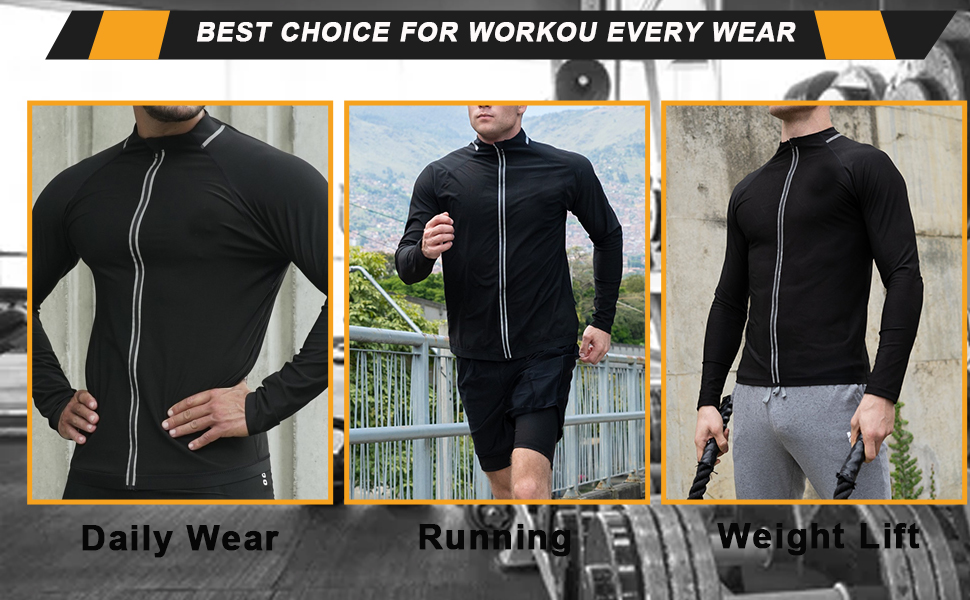
Examples of thermogenic clothing illustrate heat-retaining and active warming designs.
Scientific Evidence and Effectiveness
- Heat-Retaining Clothing: A review in Sports Medicine found neoprene suits increase sweat and heart rate, boosting EE by 5-15% during exercise, but primarily via water loss—not fat. Although, this study did not evaluate body composition weekly during a prolonged timeline monthly over a year.
- Cooling Garments: BAT activation from mild cooling can burn 100-200 kcal/day, per Cell Reports Medicine, but clothing-specific trials are limited; one on PCM-treated shirts found improved comfort but inconsistent EE boosts.
- Adaptive/Smart Tech: LifeLabs’ reflective fabrics demonstrated 18°F warming in lab tests, potentially saving energy indoors, but human thermogenesis studies are emerging. Heated vests show promise for NST in cold, with a Journal of Thermal Biology study noting 10% metabolic increase.
Implications: While clothing can enhance acute thermogenesis (e.g., +50-200 kcal/session), long-term fat loss requires lifestyle modification with proper nutrition/muscle building exercise. Evidence gaps: Few RCTs on fat oxidation; most focus on comfort/thermoregulation. Edge case: In athletes, such clothing aids recovery but risks dehydration.

Practical Tips for Using Thermogenic Clothing
To maximize benefits:
- Layer Strategically: Start with moisture-wicking base layers (e.g., polyester) under insulating pieces to manage sweat. Wear during moderate cardio (10-20 min) 3-5x/week prior to resistance training routines.
- Combine with Activity: Pair with HIIT or cold exposure for synergistic effects—e.g., cooling vest pre-workout activates BAT.
- Monitor Hydration: Drink 500ml extra cold water/hour; use electrolytes to prevent cramps.
Lifestyle Kcal Estimates: 10-20 Min Cardio + Intense Weight Training 4-5x/Week + Thermogenic Clothes/Hat + NEAT + 500 kcal Deficit Meal Plan/Year
Let’s look at the numbers to back the logic of incorporating all strategies from THE PLAN by RichLDNRD into one’s healthy lifestyle & achieving fat loss goals while building muscle. To do this we will use a 200 lb man & woman who are 30-50 years old actively performing the Pa Pa Workout & implementing all tactics perfectly. (hypothetically if we lived in a vacuum with all variables being perfect & precise)
Cardio (15 min avg = 0.25 hr) + 1.5 hr weights (total 1.75 hr session, but calcs use ~1.65 hr approx). Frequency 4.5/week (234 sessions/year, ~386 training hours). Thermo clothes/hat: 20-50 kcal/hr add (neoprene/heat retention). NEAT baseline (man 800 kcal/day, woman 700); thermo ±10-30 kcal/day variation (discomfort/movement). 500 kcal/day deficit = 182,500 kcal/year (~52 lbs theoretical, 42-47 realistic w/ 10-20% adaptations). Assumes 200 lb, 30-50 yo (40 avg); man higher EE (~10%).
Per-Session Kcal Differences Table (Training + Thermo/NEAT Influence)
| Scenario | Man (kcal/session) | Woman (kcal/session) | Net Insight |
|---|---|---|---|
| With Thermo Clothes/Hat | +33.0-82.5 (training) +10-30 (daily NEAT avg) = +35.2-89.2 | +33.0-82.5 +10-30 = +35.2-89.2 | Minor boost (2-5%); heat retention + discomfort NEAT. |
| Without | Baseline; +10-30 (NEAT if cooling) | Baseline; +10-30 | Cooling may increase subtle movement. |
| Net Difference | Thermo adds ~0-30 (1-4%) | Thermo adds ~0-25 (1-3%) | Favors thermo for edge. |
Annual Kcal Differences Table (No Deficit: Training + NEAT)
| Scenario | Man (kcal/year; Lbs) | Woman (kcal/year; Lbs) | Equivalent Insight |
|---|---|---|---|
| Total EE | ~467500 (133.6) | ~413450 (118.1) | ~137 lbs man, 121 woman theoretical (80-90% realistic). |
| With Thermo Add | +11372-30255 (3.2-8.6) | +11372-30255 (3.2-8.6) | +2-6 lbs; NEAT variability key. |
| Without | Baseline +3650-10950 NEAT boost | Baseline +3650-10950 | +0.5-2 lbs extra without. |
| Net Difference | Thermo +7722-26605 (1-3%) | Thermo +7722-26605 (1-2.5%) | Favors thermo 1-4 lbs/year. |
One-Year Projections Table (With 500 kcal Deficit)
| Scenario | Man (kcal/year; Lbs Lost) | Woman (kcal/year; Lbs Lost) | Net Insight |
|---|---|---|---|
| Base Deficit + Total EE | 182500 +467500 = ~650000; ~189 lbs (~150-170 realistic) | 182500 +413450 = ~595950; ~173 lbs (~140-160) | Deficit dominates (90%); adaptations reduce 10-20%. |
| With Thermo Add | +11372-30255; Extra ~3.2-8.6 lbs | +11372-30255; Extra ~3.2-8.6 | Thermo aids 2-6 lbs; heat/NEAT synergy. |
| Without | Baseline + NEAT boost 3650-10950; Extra ~1.0-3.1 | Baseline +3650-10950; Extra ~1.0-3.1 | 0.5-2 lbs extra without; cooling NEAT edge. |
| Net Difference | Thermo +7722-26605; +1-4 lbs more loss | Thermo +7722-26605; +0.5-3 lbs more | Small (0.5-2% total); favors thermo for nudge; 30 yo +5-10% vs. 50 yo. |
Cumulative Monthly Fat Loss Table (Theoretical: No Adaptations)
| Month | Man Cumulative Loss (lbs) | Woman Cumulative Loss (lbs) | Key Contributors (Monthly kcal; Thermo Add) |
|---|---|---|---|
| 1 | ~4.5 (low NEAT/Thermo) – ~6.0 (high) | ~4.1 – ~5.5 | Deficit ~15,200; Training ~16,000-20,000 (+1,000-2,500 Thermo); NEAT boost ~6,000-15,200 (+300-750 Thermo NEAT) |
| 2 | ~9.0 – ~12.0 | ~8.2 – ~11.0 | Cumulative; Thermo ramps comfort/efficiency |
| 3 | ~13.5 – ~18.0 | ~12.3 – ~16.5 | Q1 Total: Deficit 45,625; Training 48,000-60,000 (+3,000-7,500 Thermo); NEAT 18,250-45,625 (+900-2,250 Thermo) |
| 6 | ~27.0 – ~36.0 | ~24.6 – ~33.0 | Mid-Year: Weights preserve muscle (+5% EE, Thermo synergy) |
| 9 | ~40.5 – ~54.0 | ~36.9 – ~49.5 | Q3: Cardio gains (+10% burn, Thermo heat aids oxidation) |
| 12 | ~54.0 – ~72.0 | ~49.2 – ~66.0 | Year Total: Deficit 182,500; Training 196,560-245,700 (+23,400-58,500 Thermo); NEAT 73,000-182,500 (+10,950-27,375 Thermo) |
Annual Total Fat Loss Table (Theoretical vs. Realistic)
| Scenario | Man Loss (lbs) | Woman Loss (lbs) | Net Insight/Implications |
|---|---|---|---|
| Theoretical (100% Adherence, No Adaptations) | ~52 (deficit) + ~56-70 (training) + ~21-52 (NEAT) + ~9.5-24 (Thermo total) = ~138.5-198 | ~52 + ~50-63 + ~19-46 + ~9.5-24 = ~130.5-185 | Max; Thermo adds 5-10% synergy (heat boosts fat oxidation). |
| Realistic (80-90% Adherence, 10-20% Adaptations) | ~111-158 (low-high; -15% net) | ~104-148 | Actual ~35-55% from deficit; training/NEAT/Thermo 65% (mitigates adaptations 15-20%); edge: 30 yo +7-12 lbs vs. 50 yo -5-10 (slower recovery). |
| Net Difference (High vs. Low NEAT/Thermo) | +35-47 lbs more with high | +32-44 lbs more | Variability key; Thermo/NEAT compound in deficit (e.g., desk job low; active high); women slight BAT edge (+5%) but menopause in 50+ reduces. |
Implications (Multiple Angles): Deficit core (40-50%); training/NEAT/Thermo add 50-60% (muscle preservation offsets adaptations); cumulative 1.1-4 lbs/month realistic initial, tapering. Health: Thermo aids hypertension (sweat loss) but risks dehydration in Thalassemia/asthma; back strain—lighter thermo gear. Broader: 3-10 lbs extra from Thermo sustainable for adherence; track apps for adjustments. Consult RichLDNRD for personalization.
Conclusion
Thermogenesis is a powerful, multifaceted ally in managing kcal expenditure, potentially tipping the scales in favor of weight loss and metabolic health. By integrating tips like NEAT boosts, thermogenic clothing/hat and cold exposure with thermogenic foods (e.g., protein, spices) and judicious supplements, individuals can enhance daily burn by 200-500 kcal. However, nuances matter: Genetic variations, age, and conditions like hypothyroidism can blunt effects, while overdoing (e.g., extreme cold) risks injury. Broader implications include reduced chronic disease risk, but sustainability trumps intensity—consult RichLDNRD for personalized plans. Ultimately, thermogenesis isn’t a shortcut but a synergistic tool in a holistic lifestyle.
There you have it! The answer to the “Riddle of Steel” so none of you should be cast out from Valhalla in humiliation. When asked, simply say it’s both FIRE & ICE. However, STEEL is nothing without the strength of the hand that wields it.

Ask your dietitian RichLDNRD for assistance with a PLAN to incorporate these practical everyday habits to promote a healthy lifestyle for yourself & your family.
Discover more from Rich Kilchrist RDN LDN Registered Dietitian & Licensed Nutritionist
Subscribe to get the latest posts sent to your email.
