
In another extraordinary COINCIDENCE of protein food sources that have been suddenly facing unprecedented mass kills in poultry, beef & eggs earlier this year Alaska’s winter snow crab season has been called off for the first time in the state’s history due to concerns for the species’ falling population.
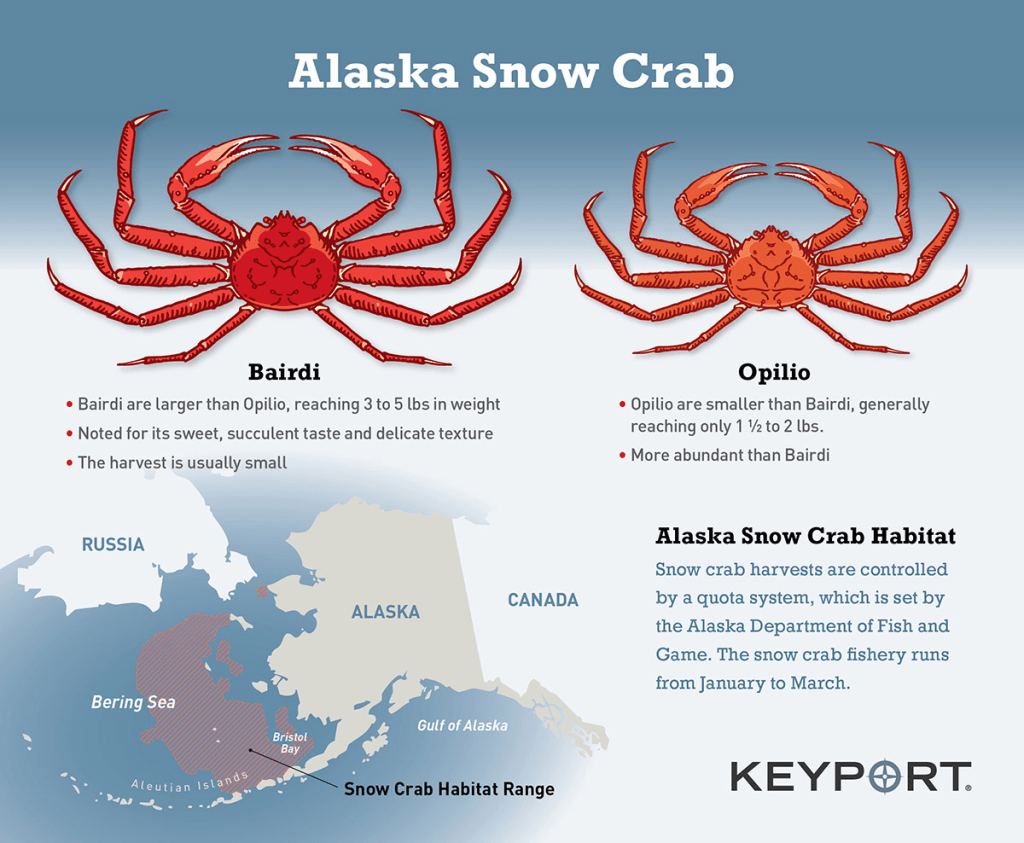
The Alaska Department of Fish and Game announced the decision last week amid worries about the Bering Sea snow crab’s population, which scientists say has fallen 90 percent in the last two years.
This is especially worrisome for the state of Alaska, whose economy creates a large chunk of revenue from seafood such as crab.
It also comes amid America’s struggle to fight off food shortages as the nation battles record-high inflation. Last year, state officials noted similar population concerns.
One boat captain, Dean Gribble Sr., who has fished for crab for over 40 years, said the decision made by Alaska Department of Fish and Game “is going to be life-changing, if not career-ending, for people.”
Gribble, 63, warned that the financial fallout will likely break the men whose livelihoods rely on crab season.
“A lot of these guys with families and kids, there’s no option other than getting out. That’s where the hammer is going to fall — on the crew,” Gribble said.
He added, “The last three years or four years of fishing for opies, I’ve had to go up to the Russian border and fish.”
It is still unknown what is behind the steep drop in the crab population, though scientists at the ADF&G have attributed it to climate change. (right right right)
“Environmental conditions are changing rapidly,” ADF&G researcher Ben Daly said “We’ve seen warm conditions in the Bering Sea the last couple of years, and we’re seeing a response in a cold-adapted species, so it’s pretty obvious this is connected. It is a canary in a coal mine for other species that need cold water.”
NBC reported that the snow crab population began to collapse after the Bering Sea experienced record-breaking warmth in 2019.
“We’re along for the ride. It’s hard to predict or pretend we could have influences on a stock that is subject to Mother Nature and climate change,” said Miranda Westphal, an area management biologist with the ADF&G.
“They need time and space and favorable conditions to rebuild.”
Westphal said that the ADF&G, which co-manages Alaska’s crab fisheries alongside the National Marine Fisheries Service, in 2018 “saw the largest pulse of small crab we’d ever seen in the history of fishery.”
NBC reported that the department saw promising numbers again in 2019. No survey was conducted in 2020 due to COVID-19.
However, Westphal said last year, “we saw the biggest crash we’ve ever seen in snow crab. That was really unexpected. I don’t think anyone saw this coming.”
She suspects that the crab just couldn’t survive rising temperatures.
“They couldn’t deal with it. They couldn’t find enough food. They couldn’t move to colder waters,” she said, adding, “The most plausible explanation is probably starvation.”
AM I THE ONLY ONE WHO IS SUSPICIOUS OF ANYTHING NBC OR GOVERNMENT AGENCIES REPORT ANYMORE?
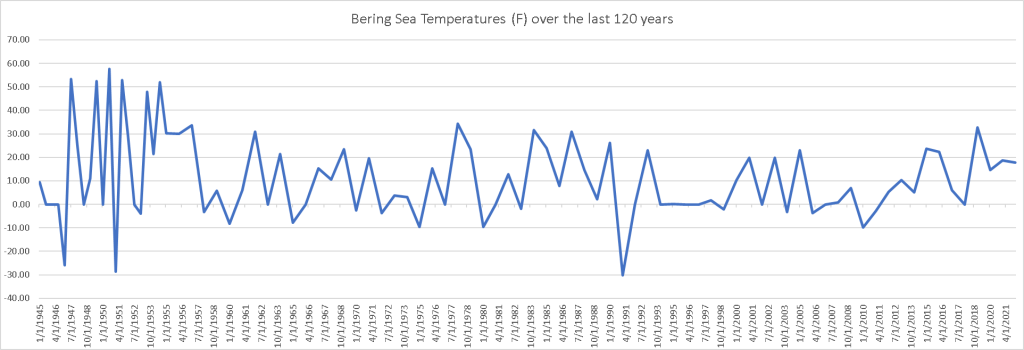
Funny thing that has happened in the last 2 years for finding annual data to compare changes from year to year have all be CDC changed, making the once easily comparable data to a very cumbersome time-consuming process. If I didn’t know any better, it appears as though there has been an effort with all data sites relating to globalist narratives to make easy data comparison nonresistant.
Discover more from Rich Kilchrist RDN LDN Registered Dietitian & Licensed Nutritionist
Subscribe to get the latest posts sent to your email.
